
Korea stock market, a dynamic hub of innovation and culture, is rapidly emerging as a must-consider destination for global investors. For too long overlooked, the Korean stock market now presents a unique confluence of factors that make it exceptionally attractive. Here’s why smart money is starting to look East:
- Historically Undervalued Market: The Korean market, often characterized by its “Korea Discount,” has consistently traded at lower valuations compared to its global peers despite its robust corporate earnings and technological prowess. This long-standing undervaluation suggests significant upside potential as market inefficiencies are corrected.
- Examples: KB Financial Group, a leading financial institution often trading below its book value; POSCO Holdings, a global steel giant with solid fundamentals.
- Shareholder-Friendly Policy Shifts: A major driver of the “Korea Discount” has been perceived low shareholder returns. However, the current government is actively pushing for corporate governance reforms, including amendments to commercial law, aimed at enhancing shareholder value. These regulatory changes are creating a much more favorable environment for minority shareholders and encouraging companies to prioritize dividends, buybacks, and overall investor returns.
- Examples: Hyundai Motor Company and Samsung C&T Corporation, both under increasing pressure to improve shareholder returns and governance.
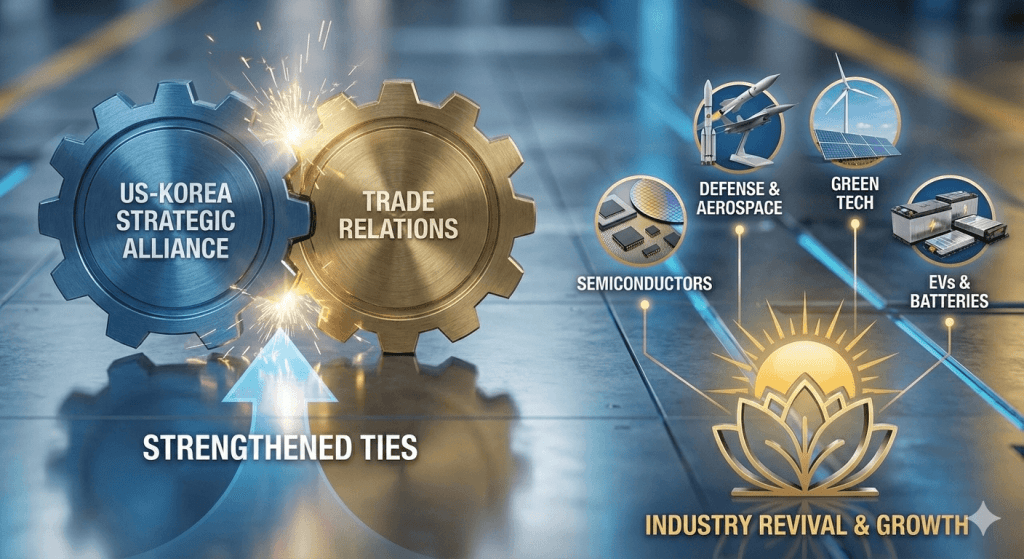
- Strengthening Alliances and Related Industry Themes: Korea’s robust alliance with the United States is fostering expanded opportunities in critical industries. This strategic partnership is driving growth and investment in sectors such as nuclear energy, power equipment, shipbuilding, defense, semiconductors, secondary batteries, and biotechnology, offering significant thematic investment plays.
- Examples: Hanwha Aerospace in defense; Doosan Enerbility in power and nuclear energy; HPSP for advanced semiconductor equipment.

- Examples: Hanwha Aerospace in defense; Doosan Enerbility in power and nuclear energy; HPSP for advanced semiconductor equipment.
- Global Rise of Korean Industry and Culture: The worldwide phenomenon of K-Culture (K-Pop, K-Drama, K-Beauty) continues to fuel exponential growth in related content and consumer goods companies. Beyond entertainment, Korean brands are gaining global recognition for quality and innovation, leading to sustained growth for companies in consumer discretionary, technology, and branding sectors.
- Examples: HYBE Corporation, the powerhouse behind global K-Pop artists; APR Corp., a leading K-beauty and lifestyle company with innovative brands; Samyang Foods Co., Ltd., globally recognized for its “Buldak” spicy noodles.
- Examples: HYBE Corporation, the powerhouse behind global K-Pop artists; APR Corp., a leading K-beauty and lifestyle company with innovative brands; Samyang Foods Co., Ltd., globally recognized for its “Buldak” spicy noodles.
- Emerging Hub for New Technology Themes like AI: Korea is rapidly establishing itself as a central player in cutting-edge technologies, particularly in Artificial Intelligence. With world-class infrastructure and a highly skilled workforce, Korean companies are at the forefront of AI development, robotics, and other future-defining innovations, positioning the market as a key beneficiary of global tech trends.
- Examples: Naver Corporation, a leader in AI research, cloud computing, and search engines; SK Hynix, a global leader in HBM (High Bandwidth Memory) crucial for AI servers.
- Strong Economic Fundamentals and Export Competitiveness: Despite global uncertainties, Korea maintains robust economic fundamentals driven by its manufacturing strength and export-oriented economy. As a global leader in key industrial sectors, Korea exhibits resilience and consistently contributes significantly to global trade, underpinning corporate profitability.
- Examples: Samsung Electronics, a global titan in electronics and semiconductors; LG Chem, a diversified chemical company with strong global market positions.
- Critical Position in Global Supply Chains: Korean companies hold indispensable positions within vital global supply chains. From advanced semiconductors powering the world’s electronics to essential components for electric vehicles and biopharmaceuticals, investing in Korea offers direct exposure to the critical backbone of global industry growth.
- Examples: SK Hynix and Samsung Electronics for memory chips; LG Energy Solution for electric vehicle batteries.

The confluence of these factors signals a paradigm shift for the Korean stock market. Global investors now have an unprecedented opportunity to capitalize on a market that is not only addressing its historical challenges but also leveraging its inherent strengths and strategic positioning for future growth.




Leave a Reply